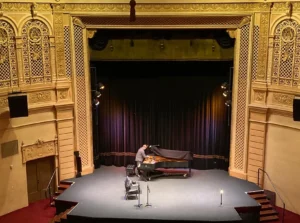
A heavy coastal downpour can quickly change weekend plans. If you are looking for an indoor activity, a matinee or evening show can make for a memorable experience. Stepping inside a preserved historic theater near you like the Liberty Theatre gets you out of the rain and lets you experience classic Pacific Northwest architecture firsthand.
What Are the Best Things to See Inside a Historic Theater Nearby?
Historic theaters often have details that visitors miss if they only look straight ahead at the box office. The Liberty Theatre, for example, features several restored architectural details that give visitors a direct look at 1920s craftsmanship.
Historic Theater Interior Feature Highlights
The Liberty Theatre in Astoria serves as an excellent regional example of theater preservation. A closer look reveals the 1920s craftsmanship across three standout features:
- The Illuminated Marquee: The Liberty Theatre’s illuminated sign serves as a recognizable landmark in downtown Astoria. Its restored replica canopy and vertical “Liberty” sign add a warm, vintage presence to the streetscape. Maintaining this marquee helps preserve the theater’s connection to the city’s early-20th-century character.
- Restored Venetian Murals: Inside the main auditorium, 12 oil-on-canvas murals painted by Joseph Knowles surround the seating area. These artworks depict Venetian canal scenes and give the room a distinctive Mediterranean atmosphere. They surround the audience with remarkable art before the show even begins.
- The Historic Proscenium Stage: A classic proscenium arch frames the historic vaudeville stage, drawing attention to the performers. The theater’s historic design and auditorium proportions contribute to its noted natural acoustics. The restored space continues to support live music, film, and live performances.
How to Access and View These Historic Features
Theaters usually follow event schedules rather than museum-style open hours. To see their architectural details, a little planning goes a long way:
- Book an Event Ticket: Buying a ticket to a scheduled film, concert, or local performance gives you access to the public areas associated with your event. It lets you experience the space as part of the audience.
- Arrive Before Showtime: Plan to arrive 20 to 30 minutes before the event begins. This extra time may allow you to settle in and take in the lobby and auditorium details, following venue policies.
- Ask About Tours: Contact the venue or check its official website to learn whether architectural tours, open houses, or special viewing opportunities are available.
What to Know Before You Visit
A little preparation makes a theater visit easier. Before purchasing, check the event listing for door times, start times, ticket types, and any age recommendations. Arriving early gives you time to find parking, check in, and settle into your seat without rushing.
If you plan to take photos, review the venue’s photography policy first, since rules can vary by event and some areas may be restricted. Visitors with accessibility needs can contact the box office ahead of time to ask about seating options, entrances, and available assistance. Comfortable shoes and a light layer are practical choices for moving between downtown and the theater.
Where to Capture the Best Photos
Preserved 1920s architecture provides striking photo backdrops. Knowing where to look helps you capture the scale and detail of the space during your visit:
- Under the Marquee: Dusk is an excellent time to photograph the exterior sign. The illuminated marquee stands out against the dimming sky and creates a classic vintage aesthetic. Follow venue and local photography rules.
- The Auditorium Murals: To see Joseph Knowles’s work, look toward the auditorium walls from a central vantage point. When photography is permitted, a wide view can capture the Venetian canal scenes and the ornate plaster arches surrounding them.
- The Stage Arch Symmetry: For a dramatic interior shot, position yourself centrally in the auditorium or balcony when those areas are accessible. This angle can capture the proscenium’s symmetry and emphasize the room’s grand ceiling height.
Related Articles:
- Top Indoor Photography Spots at a Historic Astoria Theater
- Why Historic Astoria Theaters Offer the Best Event Backdrops
Take Your Seat at the Liberty Theatre
Attending an upcoming concert, film screening, or live performance is the best way to experience the Liberty Theatre’s preserved 1920s craftsmanship firsthand. Sitting in the audience lets you take in the full scale of the proscenium stage, the restored Venetian murals, and the glowing marquee exactly as they were meant to be enjoyed.
Check our event calendar, secure your tickets in advance, and arrive early to explore this iconic historic theater near you before the lights dim.